Travis Appaloosa’s death
Big BrotherTravis Appaloosa’s death, caused by a fatal stroke, brings his children back together around a father whose television persona had long furnished their private language of mockery. At his Los Angeles memorial, the surviving cast of Joint Custody joins the family, but the gathering exposes how much their shared history depended on joking about Travis—and how little that habit had prepared Pandora Halfdanarson and Edison Appaloosa to speak about him without it.
Background and Family Memory
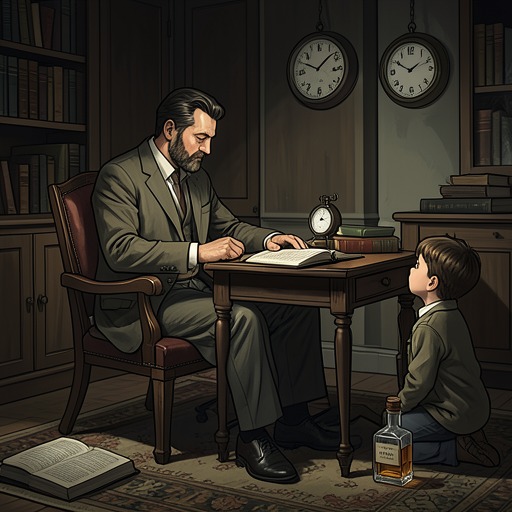
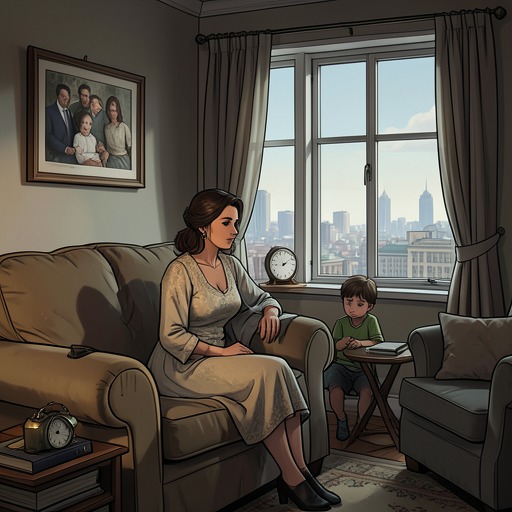
Travis was both Pandora’s father and the television actor who played Emory Fields, the idealized father in Joint Custody. At home, Pandora experienced a less attentive, self-absorbed parent; on Wednesday nights for eight years, the television offered her an alternate family, including Maple Fields, the kinder, more altruistic version of herself. The mismatch between the show’s successful fictional household and the family’s real life formed part of the childhood history she could most readily revisit with Edison.
The siblings had made their father a recurring subject of ridicule, especially his attempts to regain public attention and his opinions about television. Their jokes offered a way of touching a painful shared past while keeping it at a manageable distance. When Fletcher Feuerbach emailed Travis a birthday photograph of Edison, however, the image brought their private humor into direct contact with their father: Edison objected that Travis would see how much weight he had gained. The photograph later acquired a different significance after Travis’s death.
Death and Memorial
The narrative confirms that Travis suffered a fatal stroke. Two years after Edison’s extended visit to New Holland, Pandora arranged for her brother to travel to Los Angeles for their father’s memorial, sending him a business-class ticket because flying had become logistically difficult for him. Pandora, Fletcher, and Cody flew ahead and met Edison at the airport in a spacious limousine. The family took care to accommodate his slow gait and make clear that he was not a burden.
The memorial reception took place in the back room of Rosita’s, Travis’s favorite Mexican restaurant. Tanner attended while pursuing entry-level work in television, and the surviving cast of Joint Custody appeared as well. Pandora found that their old ridicule of the actors worked less well face to face: the figures they had treated as childhood rivals were now middle-aged people, many of whom she barely recognized. The reunion placed a real community of former colleagues and family members around the loss, rather than leaving Travis as only the television celebrity they had mocked.
The Photograph and Its Afterlife
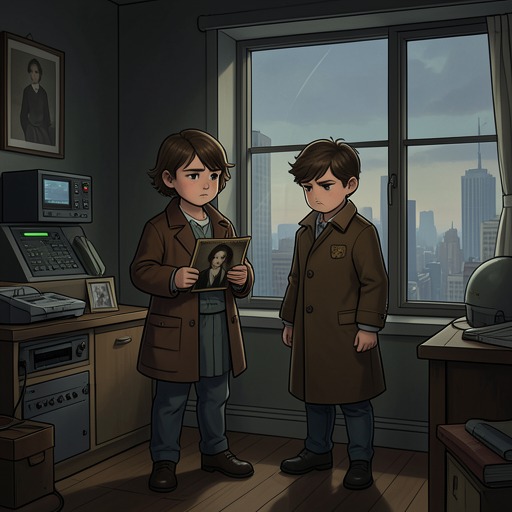
The birthday photograph Pandora had sent Travis showed Edison near his Coming of Size celebration, looking lean, eager, and luminous. Pandora was relieved she had sent it: she understood it as the last portrait of his firstborn that Travis had been left with, and as an image that made the news of his father’s death easier for Edison to accept. She had called it the essence of Edison and later framed it in her study, where she continued to contemplate it with mixed feeling.
The photograph’s importance rests on its contrast with Edison’s physical decline and the humiliating prospect of being seen only through his size. It preserved a particular moment of vitality for Travis, and for Pandora it became a durable image of her brother beyond the body others might remember. Its role also reverses the earlier conflict around the same picture: what Edison had resented as an exposure to his father became, after Travis died, a portrait that offered consolation.
What the Memorial Reveals
At dinner, Pandora and Edison meet their sister Solstice, whose grief is so evident that Pandora asks the waiter for extra napkins. The siblings had imagined Solstice grew up in a different family because she missed Travis’s television heyday. Pandora recognizes instead that Solstice had effectively grown up with little family: their mother died when Solstice was three, and her two older siblings had shunned her as they bonded with each other. Solstice’s refusal to hear criticism of Travis makes the gap between their family experiences newly visible.
Without Travis to mock, Pandora and Edison find that they have surprisingly little to talk about. The memorial therefore does more than mark a death: it removes the familiar subject around which the siblings’ closeness had been organized. The surviving cast’s presence sharpens that shift, turning childhood television into a gathering of aging people whose real histories cannot be reduced to their old screen roles.
Narrative Significance
Travis’s death is reported within Pandora’s later, retrospective account, alongside her explicit distinction between what truly happened and the imagined resolution she had constructed around Edison. She confirms the fatal stroke as fact while acknowledging elsewhere that parts of the story of Edison’s transformation were invention. That difference matters: the memorial and its consequences belong to the factual ground of her account, while the photograph’s emotional meaning remains her interpretation of what it could preserve.
The event also changes the terms of the sibling bond. For years, Travis’s celebrity and shortcomings supplied shared material; after his death, that inherited script falls silent, leaving Pandora to confront both Solstice’s estrangement and the limits of her own closeness with Edison. The memorial gathers family, former castmates, and old television memories in one room, but does not restore the family unity the show once represented.